


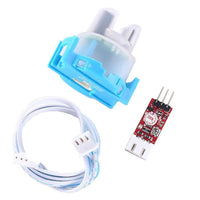
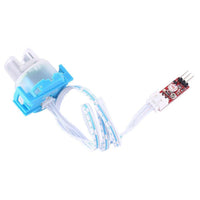
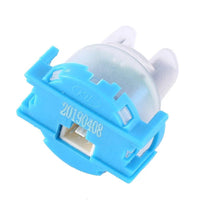
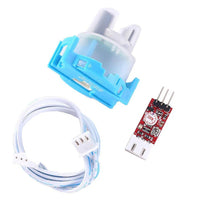


Turbidity Sensor With Module for Liquid Particle Detection
Rs. 460.00
(Incl. GST)
QUICK OVERVIEW
- A turbidity sensor (also known as a turbidity liquid particle detection sensor) is a device used to measure the turbi...
- If you're wondering what is turbidity sensor, it is commonly used to detect the presence of suspended particles such ...
- This turbidity module requires the analog port of a microcontroller (MCU) to read analog values for accurate calculation
- It also requires turbidity calibration liquid for proper calibration and is not a device that directly measures volta...
🚚 Item will be delivered on or before

A turbidity sensor (also known as a turbidity liquid particle detection sensor) is a device used to measure the turbidity, or cloudiness, of a liquid. If you're wondering what is turbidity sensor, it is commonly used to detect the presence of suspended particles such as dirt, algae, or bacteria in water.
The sensor works by shining a light through the liquid and measuring the amount of light that is scattered or absorbed due to the presence of particles.
Turbidity is the measurement of particulate matter in water. This turbidity module requires the analog port of a microcontroller (MCU) to read analog values for accurate calculation. It also requires turbidity calibration liquid for proper calibration and is not a device that directly measures voltage like a multimeter.
The output voltage of each module may vary. To ensure accurate readings, the module should be protected from external light interference. Temperature and voltage fluctuations can also affect the output voltage of the module.
These measurements are often based on comparisons between clean water (measured at the beginning of a process) and the turbidity levels at later stages. For example, in dishwashers, turbidity sensing helps optimize washing cycles.
By measuring the turbidity of wash water, systems can conserve energy by adjusting operation time based on cleanliness. This results in improved efficiency and energy savings for users.
| Vendor | electro robo store |
|---|---|
| Type | ph and turbidity sensor |
| Sku | MT1161 |
| Barcode | true |
