




LM386 Low Voltage Audio Power Amplifier IC
Rs. 14.00
(Incl. GST)
QUICK OVERVIEW
- LM386 Low Voltage Audio Power Amplifier IC The LM386 Low Voltage Audio Power Amplifier IC is a compact and efficient ...
- It is widely used in portable audio devices, DIY speaker systems, intercoms, and embedded electronics projects where ...
- This allows it to be used in portable devices where power efficiency is important
- Despite its low voltage operation, it is capable of delivering sufficient audio output power for small speakers, typi...
🚚 Item will be delivered on or before

LM386 Low Voltage Audio Power Amplifier IC
The LM386 Low Voltage Audio Power Amplifier IC is a compact and efficient integrated circuit designed specifically for low-power audio amplification applications. It is widely used in portable audio devices, DIY speaker systems, intercoms, and embedded electronics projects where simple and efficient audio amplification is required.
The LM386 is designed to operate at low supply voltages, typically from 4V to 12V, making it highly suitable for battery-powered circuits. This allows it to be used in portable devices where power efficiency is important. Despite its low voltage operation, it is capable of delivering sufficient audio output power for small speakers, typically up to 0.5W, depending on the load and supply conditions.
One of the key advantages of the LM386 is its simplicity. It requires very few external components to operate, which makes it ideal for beginners and quick prototyping. Internally, it contains a complete amplifier system that reduces the need for complex circuit design.
The IC also provides adjustable gain control, typically ranging from 20 to 200, allowing users to increase or decrease the amplification level by adding or modifying a simple external capacitor. This flexibility makes it suitable for a wide range of audio applications.
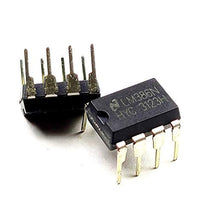
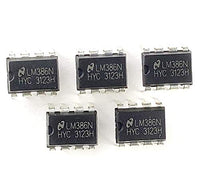
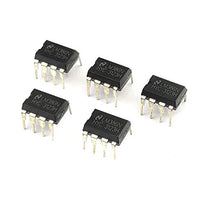
The LM386 comes in a standard DIP (Dual In-line Package), which makes it easy to use on breadboards and PCBs. Its small size and through-hole design make it convenient for both learning and professional electronics projects.
Working Principle
The LM386 works by taking a small audio input signal and amplifying it to a higher power level suitable for driving a speaker.
-
The input audio signal is fed into the amplifier stage.
-
Internal transistors increase the signal amplitude.
-
The output stage drives a small speaker or load.
-
Gain can be adjusted externally to control volume.
This process allows weak audio signals (from microphones, sensors, or audio sources) to be amplified into audible sound.
Key Features
-
Low voltage operation (4V to 12V)
-
Output power up to 0.5W
-
High voltage gain (20 to 200 adjustable)
-
Minimal external component requirement
-
Suitable for battery-powered applications
-
Compact DIP package for easy mounting
-
Low power consumption
-
Simple and beginner-friendly design
Applications
The LM386 Audio Amplifier IC is widely used in:
-
Portable audio amplifiers
-
DIY speaker projects
-
Intercom systems
-
Microphone amplifiers
-
Arduino audio projects
-
Robotics sound systems
-
Educational electronics projects
-
Battery-powered audio devices
-
Alarm and alert systems
-
Embedded audio applications
Specifications
-
Product Type: Low Voltage Audio Amplifier IC
-
Model: LM386
-
Operating Voltage: 4V – 12V
-
Output Power: Up to 0.5W
-
Gain Range: 20 – 200
-
Package Type: DIP
-
Function: Audio signal amplification
Package Includes
-
1 × LM386 Audio Amplifier IC
Safety Precautions
-
Do not exceed recommended supply voltage.
-
Use proper decoupling capacitors for stable operation.
-
Avoid short circuits at output terminals.
-
Ensure correct polarity when powering the IC.
-
Handle IC carefully during soldering to avoid overheating.
| Vendor | electro robo store |
|---|---|
| Type | LM386 Low Voltage Audio Power Amplifier IC |
| Sku | MT0423 |
| Barcode | true |
