



Hydroponic Farming System Basic Module Project
Rs. 1,999.00
(Incl. GST)
QUICK OVERVIEW
- Hydroponic Farming System Basic Module Project The Hydroponic Farming System Basic Module Project is an innovative sm...
- This project demonstrates the principles of hydroponic farming, automated irrigation, and environmental monitoring us...
- It is widely used for educational purposes, research, urban farming, greenhouse cultivation, and sustainable agricult...
- Since the plants receive nutrients directly from the water, they can grow faster and more efficiently than in traditi...
🚚 Item will be delivered on or before

Hydroponic Farming System Basic Module Project
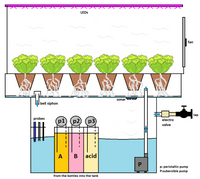
The Hydroponic Farming System Basic Module Project is an innovative smart agriculture project designed to grow plants without soil by supplying water enriched with essential nutrients directly to the plant roots. This project demonstrates the principles of hydroponic farming, automated irrigation, and environmental monitoring using sensors and microcontrollers. It is widely used for educational purposes, research, urban farming, greenhouse cultivation, and sustainable agriculture.
The system works by circulating a nutrient-rich water solution through a reservoir to the plant roots using a water pump. Since the plants receive nutrients directly from the water, they can grow faster and more efficiently than in traditional soil-based farming. The water continuously circulates through the system, reducing water wastage and ensuring that the roots receive sufficient oxygen and nutrients.
The project can monitor important environmental parameters such as water level, temperature, humidity, light intensity, nutrient concentration, and pH level using suitable sensors. A microcontroller processes the sensor data and can automatically control the water pump, grow lights, or other equipment to maintain optimal growing conditions. The system may also display real-time information on an LCD or OLED screen or transmit data through Wi-Fi for remote monitoring.
The Hydroponic Farming System Basic Module Project typically consists of an Arduino, ESP32, NodeMCU, or Raspberry Pi, water pump, nutrient reservoir, PVC pipes or hydroponic channels, plant holders (net pots), water level sensor, temperature and humidity sensor, pH sensor (optional), TDS/EC sensor (optional), relay module, LED grow lights, power supply, and connecting components.
The project is compatible with popular development platforms including Arduino, ESP32, ESP8266, Raspberry Pi, STM32, PIC, AVR, and other programmable microcontrollers. It can be programmed using the Arduino IDE and expanded with IoT features such as cloud monitoring, mobile notifications, and automated nutrient management.
The Hydroponic Farming System Basic Module Project is widely used in smart farming, greenhouse automation, urban agriculture, educational laboratories, agricultural research, engineering projects, IoT applications, sustainable farming, indoor gardening, and embedded systems training. It helps users understand sensor interfacing, water circulation, automation, environmental monitoring, and precision agriculture.
The project offers several advantages, including soil-free cultivation, efficient water usage, faster plant growth, reduced pesticide requirements, automated irrigation, space-saving design, improved crop quality, and easy monitoring. Additional features such as automatic nutrient dosing, weather monitoring, cloud data logging, AI-based crop analysis, and smartphone control can further enhance the system.
The Hydroponic Farming System Basic Module Project is an excellent educational and practical project for students, engineers, hobbyists, researchers, and agriculture enthusiasts interested in smart farming and sustainable food production. Its combination of hydroponic cultivation, automation, sensor technology, and IoT integration makes it an ideal platform for learning modern agricultural techniques and developing innovative farming solutions.
| Vendor | electro robo store |
|---|---|
| Type | Hydroponic Farming System Basic Module Project |
| Sku | MT1730 |
| Barcode | true |
