





Automatic Street Light Two Way Control Project
Rs. 1,299.00
(Incl. GST)
QUICK OVERVIEW
- Automatic Street Light Two Way Control Project The Automatic Street Light Two Way Control Project is an intelligent l...
- The project helps reduce unnecessary power consumption by controlling street lights only when required
- It combines sensor technology and electronic control to provide an energy-efficient and automated solution for street...
- The system typically consists of components such as Light Dependent Resistor (LDR) sensor, Infrared (IR) sensors, mic...
🚚 Item will be delivered on or before

Automatic Street Light Two Way Control Project
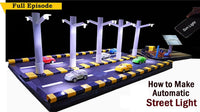
The Automatic Street Light Two Way Control Project is an intelligent lighting control system designed to automatically switch street lights ON and OFF based on surrounding light conditions and movement detection. The project helps reduce unnecessary power consumption by controlling street lights only when required. It combines sensor technology and electronic control to provide an energy-efficient and automated solution for street lighting systems used in roads, highways, residential areas, campuses, and industrial locations.
The main purpose of this project is to create a smart street lighting system that operates automatically without manual switching. The system typically consists of components such as Light Dependent Resistor (LDR) sensor, Infrared (IR) sensors, microcontroller or control circuit, relay module, LED lamps, power supply unit, and switching components. These components work together to detect environmental conditions and control the operation of street lights efficiently.
The LDR sensor is used to detect the intensity of surrounding light. During daytime, when sufficient sunlight is available, the sensor output keeps the street lights switched OFF to save electrical energy. When darkness is detected during nighttime, the control circuit automatically activates the lighting system. This automatic day and night detection eliminates the need for manual operation and ensures that lights are available whenever required.
The two-way control feature uses sensors placed at different points of the road to detect vehicle or pedestrian movement from both directions. When a person or vehicle approaches from either side, the sensors detect the movement and activate the required street lights. As the object moves along the road, the lights can be switched ON sequentially or remain active for a specific period before turning OFF automatically. This method reduces energy wastage compared to conventional street lights that remain ON throughout the entire night.
The control system is generally designed using platforms such as Arduino, ESP32, PIC microcontroller, or other embedded control circuits. The programmed controller processes signals from the LDR and IR sensors and controls the switching operation of the street lights through relay drivers or transistor circuits. The system can also be upgraded with IoT connectivity, wireless monitoring, and smart energy management features.
The Automatic Street Light Two Way Control Project is widely used in smart city applications, energy conservation systems, public lighting automation, and transportation infrastructure. It provides benefits such as reduced electricity consumption, improved lighting efficiency, lower maintenance requirements, and automatic operation. The system is especially useful in areas where continuous lighting is not required but safety illumination is necessary.
This project is an excellent example of combining sensors, automation, and embedded electronics to create an efficient lighting solution. It helps students and engineers understand concepts such as sensor interfacing, microcontroller programming, relay control, and energy-saving techniques. The Automatic Street Light Two Way Control Project provides a practical approach toward developing smart and sustainable street lighting systems for modern environments.
| Vendor | electro robo store |
|---|---|
| Type | Automatic Street Light Two Way Control Project |
| Sku | MT1331 |
| Barcode | true |
