


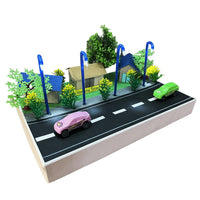
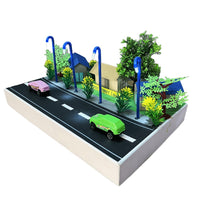
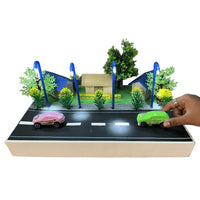



Automatic Street Light Control Project
Rs. 1,699.00
QUICK OVERVIEW
- Automatic Street Light Control Project The Automatic Street Light Control Project is an intelligent electronic system...
- The main purpose of this project is to reduce electricity consumption, improve energy efficiency, and eliminate the n...
- The system automatically turns the lights ON during darkness and switches them OFF during daylight, providing an effi...
- The main components of the system include a Light Dependent Resistor (LDR) sensor, microcontroller or control circuit...
🚚 Item will be delivered on or before

Automatic Street Light Control Project
The Automatic Street Light Control Project is an intelligent electronic system designed to automatically control street lights based on the availability of natural light. The main purpose of this project is to reduce electricity consumption, improve energy efficiency, and eliminate the need for manual switching of street lights. The system automatically turns the lights ON during darkness and switches them OFF during daylight, providing an efficient and reliable lighting solution for roads, streets, highways, residential areas, and public places.
The project works using sensors and electronic control circuits to detect changes in environmental lighting conditions. The main components of the system include a Light Dependent Resistor (LDR) sensor, microcontroller or control circuit, relay module, LED lamps or street lights, transistor switching circuit, and power supply unit. These components work together to monitor surrounding light intensity and control the operation of the street lights automatically.
The LDR sensor acts as the light detection unit of the system. The resistance of an LDR changes according to the intensity of light falling on its surface. During daytime, when sunlight is available, the LDR detects high light intensity and sends a signal to the control circuit to keep the street lights switched OFF. When the surrounding light level decreases during evening or nighttime, the sensor output changes, and the controller activates the street lights automatically.
The control section processes the signal received from the LDR sensor and operates the switching device. A relay or transistor driver circuit is used to control the high-power street lights because the sensor or microcontroller cannot directly handle the required current. When darkness is detected, the switching circuit supplies power to the lamps, and when daylight returns, the lights are automatically turned OFF, preventing unnecessary power usage.
The system can be developed using various platforms such as Arduino, ESP32, PIC microcontroller, 8051 microcontroller, or simple electronic circuits. Advanced versions of the project can include features such as motion detection, solar power integration, IoT-based monitoring, remote control, automatic brightness adjustment, and energy consumption tracking.
The Automatic Street Light Control Project is widely used in smart city applications, energy conservation systems, public lighting automation, and modern infrastructure development. It provides several advantages, including reduced electricity bills, longer lamp life, improved operational efficiency, and automatic maintenance-free operation. The system is especially useful in areas where street lights need to operate throughout the night without human supervision.
This project is an excellent example of automation technology applied to daily life. It helps students and engineers understand concepts such as sensor interfacing, electronic switching, microcontroller programming, and power management. The Automatic Street Light Control Project provides a simple yet effective solution for creating smart, energy-efficient, and environmentally friendly lighting systems.
| Vendor | electro robo store |
|---|---|
| Type | Automatic Street Light Control Project |
| Sku | MT1328 |
| Barcode | true |
