




16×2 LCD Display with I2C Module
Rs. 161.00
(Incl. GST)
QUICK OVERVIEW
- The display is capable of showing 16 characters per line across 2 lines, making it suitable for presenting sensor rea...
- By reducing the number of required microcontroller pins, the I2C version simplifies wiring, minimizes hardware comple...
- Its simple interface, reliable operation, and extensive software support make it highly suitable for beginners, stude...
- The integrated I2C adapter internally converts serial communication signals into the parallel signals required by the...
🚚 Item will be delivered on or before

16×2 LCD Display with I2C Module
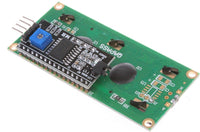
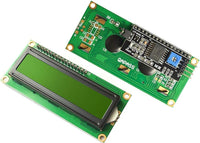
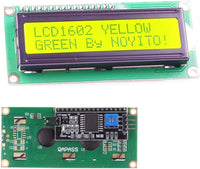
The 16×2 LCD Display with I2C Module is a compact and widely used alphanumeric display module designed for displaying text, numbers, symbols, and system information in embedded electronics and microcontroller-based projects. The display is capable of showing 16 characters per line across 2 lines, making it suitable for presenting sensor readings, menu systems, device status, and user messages in a clear and organized format.
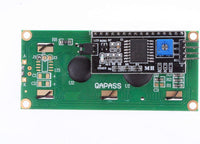
This module combines a standard 16×2 character LCD with an onboard I2C interface adapter, allowing communication through a simple two-wire serial interface. By reducing the number of required microcontroller pins, the I2C version simplifies wiring, minimizes hardware complexity, and improves project flexibility, especially in systems with limited GPIO availability.
The display is widely used in Arduino projects, Raspberry Pi systems, automation panels, robotics, industrial electronics, measurement instruments, IoT devices, educational kits, and DIY electronics applications. Its simple interface, reliable operation, and extensive software support make it highly suitable for beginners, students, hobbyists, engineers, and professional developers.
The display provides a character arrangement of:
16 \times 2
allowing a total of 32 visible characters to be displayed simultaneously.
The LCD operates using standard liquid crystal display technology controlled through an HD44780-compatible controller. The integrated I2C adapter internally converts serial communication signals into the parallel signals required by the LCD controller, enabling efficient communication with only two signal lines.
The I2C communication interface uses:
-
SDA (Serial Data Line)
-
SCL (Serial Clock Line)
This greatly simplifies interfacing compared to traditional parallel LCD connections that require multiple control and data pins.
The module generally operates using:
5\text{V DC}
making it compatible with most standard embedded development platforms and microcontroller systems.
The display can easily interface with:
-
Arduino Uno R3
-
Arduino Nano Board V3
-
Arduino Leonardo R3 Compatible Board – ATmega32U4 USB Development Board
-
ESP32 development boards
-
ESP8266 NodeMCU modules
-
Raspberry Pi 4 Model B
-
Raspberry Pi Zero 2 W
-
PLC and industrial controllers
The display module includes an onboard potentiometer that allows users to adjust the display contrast for optimal readability under different lighting conditions.
Most modules also include LED backlight functionality, improving visibility in low-light or indoor environments. Backlight colors commonly include blue, green, or yellow-green depending on the specific model.
The compact and integrated design makes installation simple and reduces the amount of external wiring required in embedded projects.
One of the major advantages of the I2C LCD module is its ability to save GPIO pins on microcontrollers. Instead of using 6–10 pins required for standard parallel LCD communication, the I2C interface generally requires only two communication pins, leaving more pins available for sensors, actuators, and additional peripherals.
The display is commonly used in embedded systems for presenting:
-
Sensor readings
-
Temperature values
-
Voltage measurements
-
Menu options
-
Device status information
-
User instructions
-
Automation data
-
IoT monitoring information
-
System diagnostics
In robotics projects, the display can show:
-
Robot movement status
-
Battery level
-
Sensor outputs
-
Operating modes
-
Wireless connection status
-
Navigation information
Industrial and automation systems frequently use the LCD for machine monitoring, control panel interfaces, production counters, and diagnostic displays.
The display is also highly suitable for educational and STEM learning projects where students learn:
-
LCD interfacing
-
I2C communication
-
Embedded programming
-
Display control systems
-
Sensor data visualization
-
User interface development
Its beginner-friendly design and available software libraries make it one of the most popular display modules for Arduino and embedded system learning.
The module can easily be connected using prototyping accessories such as:
-
GL12 840-Point Solderless Breadboard
-
MB102 830 Points Solderless Prototype PCB Breadboard
-
Jumper wires
-
Arduino development kits
The I2C LCD module is commonly used in:
-
Arduino projects
-
Raspberry Pi projects
-
Smart home systems
-
Sensor monitoring systems
-
Industrial automation
-
Educational electronics kits
-
Embedded control systems
-
DIY electronics projects
-
IoT monitoring devices
-
Measurement instruments
-
Menu-based interfaces
-
Robotics systems
The display offers low power consumption, making it suitable for battery-powered and portable electronics applications.
Another important advantage is the large availability of Arduino libraries and example programs. Developers can quickly display text and numerical data using simple commands without requiring advanced programming knowledge.
The module is highly reliable for continuous operation and provides stable character display performance in both educational and industrial environments.
Its compact design allows easy mounting inside control panels, instrument enclosures, robotic systems, and portable electronic devices.
Overall, the 16×2 LCD Display with I2C Module is a reliable, efficient, and easy-to-use display solution designed for embedded systems, robotics, automation, IoT devices, educational projects, and DIY electronics applications. Its 16×2 character display capability, simplified I2C communication, LED backlight, adjustable contrast, low power consumption, and compatibility with popular microcontroller platforms make it an excellent choice for displaying system information, sensor data, user messages, and automation status in electronic and embedded systems.
| Vendor | Electro Robo Store |
|---|---|
| Type | LCD Displays |
| Sku | MT1733-1 |
| Barcode | true |
