




PH Sensor
Rs. 1,489.00
QUICK OVERVIEW
- pH Sensor Module The pH Sensor Module is a precision liquid analysis device designed to measure the acidity or alkali...
- It is widely used in water quality monitoring, agriculture, hydroponics, aquaculture, laboratories, chemical processi...
- When the probe is immersed in a solution, it generates a very small electrical voltage that changes according to the ...
- This improves accuracy and ensures reliable measurement performance. The pH Sensor Module generally provides either a...
🚚 Item will be delivered on or before

pH Sensor Module
The pH Sensor Module is a precision liquid analysis device designed to measure the acidity or alkalinity of solutions by determining their pH value. It is widely used in water quality monitoring, agriculture, hydroponics, aquaculture, laboratories, chemical processing, environmental monitoring, and embedded automation systems where accurate pH measurement is essential.
The sensor is capable of measuring pH values on the standard pH scale ranging from 0 to 14, where:
-
pH values below 7 indicate acidic solutions
-
pH value 7 indicates a neutral solution
-
pH values above 7 indicate alkaline or basic solutions
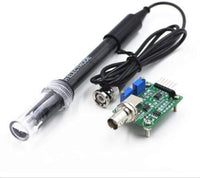
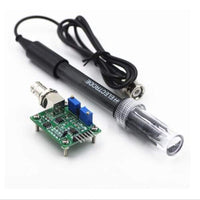
The module typically consists of two main components:
-
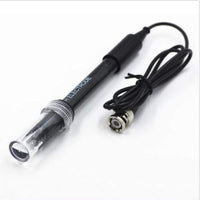
A pH glass electrode probe
-
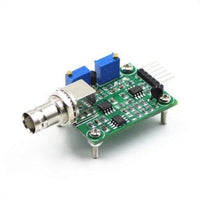
A signal conditioning and amplification circuit module
The glass electrode probe is highly sensitive to hydrogen ion concentration in liquids. When the probe is immersed in a solution, it generates a very small electrical voltage that changes according to the acidity or alkalinity of the liquid being measured.
Because the probe output voltage is extremely small and sensitive to electrical noise, the onboard signal conditioning circuit amplifies, filters, and stabilizes the signal before sending it to a microcontroller or processing system. This improves accuracy and ensures reliable measurement performance.
The pH Sensor Module generally provides either analog voltage output, digital output, or both depending on the model. The analog output can be connected directly to analog input pins of microcontrollers for continuous pH monitoring and analysis.
The module typically operates within a voltage range of approximately 3.3V to 5V DC, making it compatible with a wide range of embedded electronics platforms and automation systems.
It can be easily interfaced with popular development boards such as:
-
Arduino Uno R3
-
Arduino Nano Board V3
-
ESP32 development boards
-
ESP8266 NodeMCU systems
-
Raspberry Pi 4 Model B (using external ADC modules)
-
PLC and industrial control systems
The sensor generally provides measurement accuracy around ±0.1 pH after proper calibration, making it suitable for both educational and practical monitoring applications.
Calibration is an important part of pH sensor operation. Most pH modules support manual calibration using standard buffer solutions such as:
-
pH 4.0
-
pH 7.0
-
pH 10.0
Calibration ensures accurate readings and compensates for probe aging or environmental variations.
Many pH sensor systems also support temperature compensation because pH readings can vary depending on solution temperature. Some modules include manual adjustment mechanisms, while advanced systems support software-based compensation using external temperature sensors.
The probe itself is usually waterproof and chemically resistant, allowing it to operate reliably in liquids such as water, nutrient solutions, chemical mixtures, aquariums, and environmental samples.
The working principle of the pH sensor is based on electrochemical potential differences created by hydrogen ion concentration. The glass membrane inside the electrode reacts with the ions in the liquid and generates a voltage proportional to the pH level.
The sensor is widely used in water quality monitoring systems to measure drinking water quality, swimming pool water, industrial wastewater, and environmental water conditions.
In hydroponics and aquaponics systems, maintaining proper pH balance is critical for nutrient absorption and plant health. The pH Sensor Module enables continuous monitoring and automated nutrient control in smart agriculture systems.
Aquaculture systems use the module for monitoring water conditions in fish tanks, aquariums, and breeding environments where pH stability is essential for aquatic life.
Industrial automation systems integrate pH sensors for chemical processing, wastewater treatment, food processing, and laboratory instrumentation applications.
Typical applications of the pH Sensor Module include:
-
Water quality monitoring
-
Hydroponics and aquaponics systems
-
Aquaculture and aquarium management
-
Environmental monitoring systems
-
Chemical processing and automation
-
Laboratory experiments and research
-
Smart agriculture systems
-
Industrial liquid analysis
-
Educational STEM projects
-
DIY embedded electronics projects
The module is highly popular in IoT-based monitoring systems because it can be connected to Wi-Fi-enabled microcontrollers such as ESP32 or ESP8266 for remote pH monitoring and cloud-based data logging.
In educational environments, the sensor helps students understand electrochemical sensing, analog signal processing, calibration techniques, and environmental monitoring technologies.
The compact design and standardized interfaces make the module easy to integrate into portable devices, automation systems, and embedded monitoring equipment.
Because pH probes are sensitive components, proper handling and maintenance are important. The probe should be stored in suitable storage solution when not in use to maintain accuracy and prolong operational life.
Electrical noise reduction, proper grounding, and stable power supply design also improve sensor accuracy and measurement reliability in practical applications.
Another major advantage of the pH Sensor Module is its ability to support automated control systems. When combined with pumps, relays, and dosing systems, the module can help maintain automatic pH balancing in industrial and agricultural environments.
The wide availability of tutorials, software libraries, and sample codes for Arduino, ESP32, Raspberry Pi, and PLC systems makes development and integration easier for beginners and professionals alike.
Overall, the pH Sensor Module is a reliable, accurate, and versatile liquid analysis solution designed for water monitoring, smart agriculture, automation systems, environmental sensing, and scientific applications. Its precision measurement capability, easy interfacing, calibration support, and compatibility with popular embedded platforms make it an excellent choice for students, hobbyists, researchers, and engineers developing intelligent liquid monitoring and control systems.
| Vendor | electro robo store |
|---|---|
| Type | ph and turbidity sensor |
| Sku | MT0893 |
| Barcode | true |
