


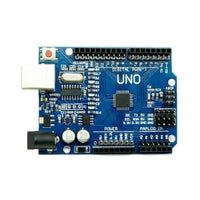
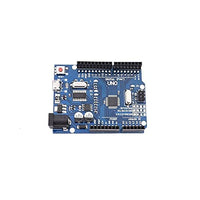
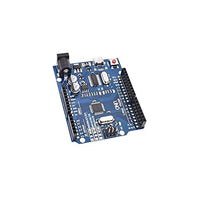
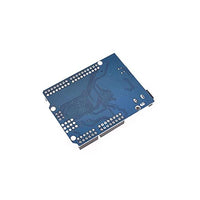
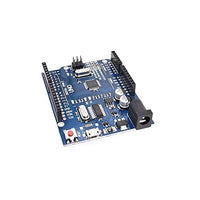


Arduino Uno R3 CH340G Atmega328p
Rs. 195.00
QUICK OVERVIEW :-
- Arduino UNO R3 (CH340G) The Arduino UNO R3 (CH340G) is o....
- Built around the powerful ATmega328P microcontroller and ....
- The Arduino UNO R3 has gained worldwide popularity becaus....
- It is suitable for beginners learning programming and ele....
🚚 Item will be delivered on or before

Arduino UNO R3 (CH340G)
The Arduino UNO R3 (CH340G) is one of the most widely used and beginner-friendly microcontroller development boards designed for electronics learning, embedded system development, robotics, automation, and Internet of Things (IoT) applications. Built around the powerful ATmega328P microcontroller and equipped with the CH340G USB-to-Serial communication chip, this board provides a cost-effective, reliable, and easy-to-use platform for developing interactive electronic systems and prototype projects.
The Arduino UNO R3 has gained worldwide popularity because of its simple hardware architecture, open-source ecosystem, extensive community support, and compatibility with a vast range of sensors, modules, shields, and software libraries. It is suitable for beginners learning programming and electronics as well as advanced developers building sophisticated embedded systems and automation projects.
At the core of the board is the ATmega328P microcontroller, an 8-bit AVR-based processor that functions as the central processing unit of the system. This microcontroller executes user-defined programs, processes input signals, and controls connected electronic devices. It is capable of reading sensor data, performing logical operations, generating output signals, and communicating with external hardware modules.
The ATmega328P operates at a clock frequency of 16 MHz, providing stable performance for a wide range of embedded applications. The microcontroller includes 32 KB of Flash memory for storing program code, 2 KB of SRAM for runtime variable storage, and 1 KB of EEPROM memory for retaining data even after power is removed. This memory architecture allows the board to handle sensor processing, control algorithms, communication tasks, and automation logic efficiently.
One of the distinguishing features of this board version is the inclusion of the CH340G USB-to-Serial converter chip. The CH340G enables communication between the Arduino board and a computer through a USB cable. It allows users to upload programs from the Arduino IDE directly to the microcontroller and provides serial communication capability for debugging, monitoring, and data exchange.
Compared to official Arduino boards that use the ATmega16U2 USB interface chip, the CH340G-based version offers a more affordable alternative while maintaining the same overall functionality and compatibility. In some operating systems, users may need to install a CH340 driver to ensure proper USB communication and device recognition.
The Arduino UNO R3 (CH340G) operates at a standard logic voltage of 5V and supports multiple power supply methods. The board can be powered directly through the USB connection during programming and testing or through an external DC power source connected via the DC barrel jack or VIN pin. The recommended input voltage range is typically 7V to 12V, while the acceptable operating range extends from approximately 6V to 20V.
An onboard voltage regulator ensures stable power distribution to the microcontroller and connected peripherals, protecting the system from voltage fluctuations and improving reliability during operation. This flexible power architecture allows the board to operate using adapters, rechargeable batteries, solar power systems, and portable power supplies.
The Arduino UNO R3 provides 14 digital input/output pins that can be configured as either inputs or outputs depending on application requirements. These pins allow interfacing with switches, LEDs, relays, buzzers, displays, communication modules, and various digital devices. Six of these digital pins support PWM (Pulse Width Modulation), enabling analog-like output control for applications such as motor speed regulation, LED brightness control, and servo operation.
The board also includes 6 analog input pins labeled A0 to A5. These analog inputs are connected to an internal analog-to-digital converter (ADC), allowing the microcontroller to measure varying voltage levels from analog sensors and devices. Common applications include reading temperature sensors, light sensors, gas sensors, potentiometers, moisture sensors, pressure sensors, and environmental monitoring modules.
The Arduino UNO R3 supports multiple communication protocols, enabling flexible integration with modern electronic devices and modules. UART serial communication is available through digital pins 0 and 1, supporting communication with computers, GPS modules, Bluetooth devices, GSM modules, and serial peripherals.
SPI (Serial Peripheral Interface) communication is supported through pins 10, 11, 12, and 13, enabling high-speed communication with displays, SD card modules, wireless transceivers, and memory devices. I²C (Inter-Integrated Circuit) communication is available through analog pins A4 (SDA) and A5 (SCL), allowing multiple devices such as sensors, RTC modules, OLED displays, and communication modules to share the same communication bus using only two wires.
Programming the board is simple and beginner-friendly using the Arduino IDE, an open-source development environment that supports a simplified version of the C/C++ programming language. The IDE provides a clean interface, built-in examples, extensive libraries, debugging tools, and serial monitoring functionality, making embedded system development accessible to users of all skill levels.
Programs, known as sketches, can be written, compiled, and uploaded to the board directly through a USB connection. The bootloader stored in the ATmega328P microcontroller eliminates the need for external hardware programmers in most applications, simplifying development and reducing hardware complexity.
The Arduino UNO R3 (CH340G) is fully compatible with a wide range of Arduino shields and expansion boards. Users can easily connect motor driver shields, Wi-Fi modules, Bluetooth modules, relay boards, Ethernet shields, sensor modules, LCD displays, GPS modules, and robotics accessories without major hardware modifications. This expandability allows developers to rapidly prototype and build advanced embedded systems.
The board is widely used in educational environments because of its simplicity and hands-on learning capability. Students can learn electronics fundamentals, programming concepts, sensor interfacing, automation logic, and communication protocols through practical experimentation and project development.
In robotics applications, the Arduino UNO R3 is frequently used for controlling motors, servos, sensors, robotic arms, obstacle avoidance systems, and autonomous navigation mechanisms. In home automation systems, it can monitor sensors and control appliances, lighting systems, security devices, and environmental controls based on programmed conditions.
The board is also highly popular in IoT projects when combined with communication modules such as ESP8266 Wi-Fi modules, GSM modules, Bluetooth modules, and Ethernet shields. Developers can create smart devices capable of transmitting sensor data to cloud platforms, mobile applications, and remote monitoring systems.
DIY electronics enthusiasts widely use the Arduino UNO R3 for experimental projects involving LED control, sensor monitoring, automation systems, wearable electronics, interactive displays, data logging systems, and smart devices. Its affordability and large ecosystem encourage creativity and innovation in embedded system design.
The compact PCB layout, durable construction, and standardized pin configuration make the board suitable for integration into custom enclosures, educational kits, portable systems, and embedded control panels. The board’s robust design supports long-term use in laboratories, classrooms, workshops, and prototype environments.
Another major advantage of the Arduino UNO R3 (CH340G) is the enormous global community supporting the Arduino ecosystem. Thousands of tutorials, project examples, software libraries, forums, and educational resources are available online, helping users quickly learn and troubleshoot projects.
The board is commonly used in applications such as:
-
Robotics and automation systems
-
IoT and smart home projects
-
Sensor interfacing systems
-
Industrial monitoring and control
-
Educational electronics laboratories
-
LED and display control systems
-
Motor and servo control applications
-
Environmental monitoring systems
-
Wireless communication projects
-
Embedded system prototyping
-
DIY electronics experiments
-
Security and alarm systems
Overall, the Arduino UNO R3 (CH340G) is a versatile, reliable, and cost-effective microcontroller development platform that combines the processing capability of the ATmega328P with the convenience of USB programming and extensive hardware compatibility. Its beginner-friendly programming environment, flexible input/output options, communication support, shield compatibility, and strong community ecosystem make it an ideal choice for learning electronics, developing embedded systems, building robotics projects, and creating innovative automation and IoT applications. Whether used by students, hobbyists, educators, or professional developers, the Arduino UNO R3 (CH340G) remains one of the most trusted and widely adopted platforms in the world of embedded electronics and prototyping.
| Vendor | Electro Robo Store |
|---|---|
| Type | Arduino Microcontroller |
| Sku | MT0096 |
| Barcode | true |
